Quick Facts
Denmark At A Glance
Colourful harbours, cycling-friendly cities, Viking heritage and a way of life that consistently ranks among the happiest in the world. Denmark combines Scandinavian design, rich history and everyday simplicity in a uniquely appealing way.
Understanding Denmark
Situated between mainland Europe and Scandinavia, Denmark is a country shaped by the sea.
Made up of hundreds of islands connected by bridges, ferries and tunnels, Denmark has long looked outward. Vikings once sailed from its shores to explore, trade and conquer across Europe, while today the country is known for innovation, sustainability and a high standard of living.
Denmark is often associated with hygge (comfort and enjoying life’s simple pleasures). While the word has become famous worldwide, visitors quickly realise it reflects a genuine part of Danish culture.
Best Areas To Explore
Copenhagen
Denmark’s capital is one of Europe’s most enjoyable cities to explore.
Compact, walkable and extremely cycle-friendly, Copenhagen combines historic architecture with modern Scandinavian design.
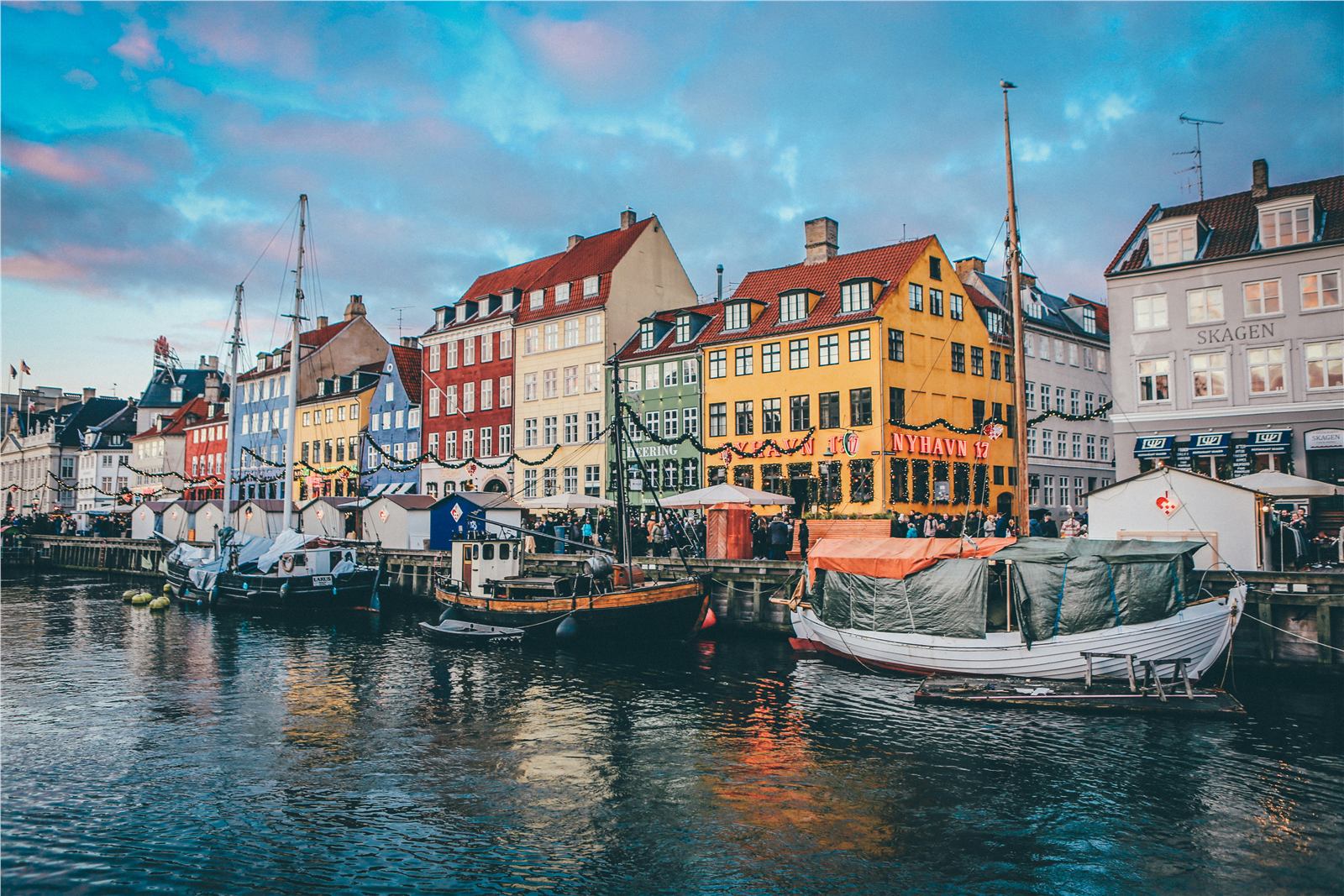
Visitors can stroll along the colourful waterfront of Nyhavn, explore Rosenborg Castle, visit the Little Mermaid statue and experience Tivoli Gardens.
Aarhus
Denmark’s second-largest city offers a youthful and creative atmosphere.
Home to a large student population, innovative architecture and excellent museums, Aarhus often feels more local and less visited than Copenhagen.
Odense
Best known as the birthplace of Hans Christian Andersen, Odense offers charming streets, colourful houses and a strong connection to Denmark’s literary heritage.
Skagen
Located at Denmark’s northern tip, Skagen is famous for its unique natural setting.
Here, the North Sea and Baltic Sea meet, creating dramatic coastal scenery that has inspired artists for generations.
The Danish Riviera
North of Copenhagen, the coastline known as the Danish Riviera offers sandy beaches, charming seaside towns and elegant summer homes.
The region is also home to Kronborg Castle, famously associated with Shakespeare’s Hamlet.
Food & Drink
Danish cuisine focuses on quality ingredients, simplicity and seasonal produce.
One of the country’s most famous culinary traditions is smorrebrod (open-faced sandwich), typically topped with ingredients such as smoked fish, roast beef, eggs or pickled herring.
Another classic is wienerbrod (Danish pastry). Freshly baked and enjoyed with coffee, it remains a daily ritual for many locals.
Denmark has also become one of the world’s leading culinary destinations thanks to its focus on local ingredients and New Nordic cuisine.
Local Culture
Denmark consistently ranks among the world’s happiest countries, and visitors often notice the relaxed and balanced lifestyle.
Cycling is part of everyday life, public spaces are well cared for and work-life balance is highly valued.
The concept of hygge influences everything from home design to social gatherings. Design also plays a central role in Danish culture, where simplicity, functionality and beauty are highly valued.
Quick Facts
| Detail | Denmark |
|---|---|
| Capital | Copenhagen |
| Population | Approximately 6 million |
| Currency | Danish Krone (DKK) |
| Language | Danish |
| Time Zone | GMT+1 |
| Known For | Hygge, design, cycling, Viking history and castles |
| Airport | Copenhagen Airport |
| Best Time to Visit | May-September |
| Visa | Denmark is part of the Schengen Area |