Quick Facts
Austria At A Glance
Elegant cities, dramatic Alpine scenery, historic coffee houses and some of Europe’s most beautiful mountain landscapes. Austria combines imperial history, outdoor adventure and cultural traditions in a way few countries can match.
Understanding Austria
Located in the heart of Europe, Austria is a country where grand imperial cities meet some of the continent’s most spectacular mountain scenery.
For centuries, Vienna served as the centre of the powerful Habsburg Empire, helping shape European politics, culture, music and architecture. Today, traces of that legacy can still be seen in magnificent palaces, elegant boulevards and world-class museums.
Yet Austria is far more than its imperial history.
Beyond the cities lie Alpine villages, crystal-clear lakes, mountain railways and landscapes that seem almost designed for postcards. Whether you’re wandering through Vienna’s historic centre, attending a classical concert in Salzburg or hiking through the Austrian Alps, the country offers a balance of culture and nature that appeals to a wide variety of travellers.
Austria is often associated with refinement and tradition, but it is also one of Europe’s easiest countries to explore, with excellent infrastructure, beautiful scenery and a high quality of life visible in everyday life.
Best Areas To Explore
Vienna
Austria’s capital is one of Europe’s most elegant cities.
Formerly the centre of the Habsburg Empire, Vienna is filled with grand palaces, impressive museums, historic coffee houses and beautiful public squares.
Visitors can explore landmarks such as Schonbrunn Palace, St. Stephen’s Cathedral and the Ringstrasse, while evenings might include a classical concert, an opera performance or simply coffee and cake in one of the city’s famous cafes.
Despite its cultural importance, Vienna feels surprisingly relaxed and liveable.
Salzburg
Surrounded by mountains and divided by the Salzach River, Salzburg is one of Austria’s most picturesque cities.
Known as the birthplace of Mozart, its beautifully preserved historic centre is filled with baroque architecture, church towers and charming streets.
The city is also closely associated with The Sound of Music, attracting visitors from around the world.
The Austrian Alps
For many travellers, the Alps are Austria’s greatest attraction.
Snow-capped peaks, alpine meadows, mountain lakes and traditional villages create some of Europe’s most spectacular scenery.
Whether you visit in summer for hiking or winter for skiing, the mountains form an essential part of the Austrian experience.
Hallstatt
Few places in Europe are photographed as often as Hallstatt.
Nestled between a lake and towering mountains, this small village has become one of Austria’s most famous destinations thanks to its extraordinary setting.
While it can be busy during peak season, early mornings and evenings reveal why it has captivated visitors for centuries.
Innsbruck
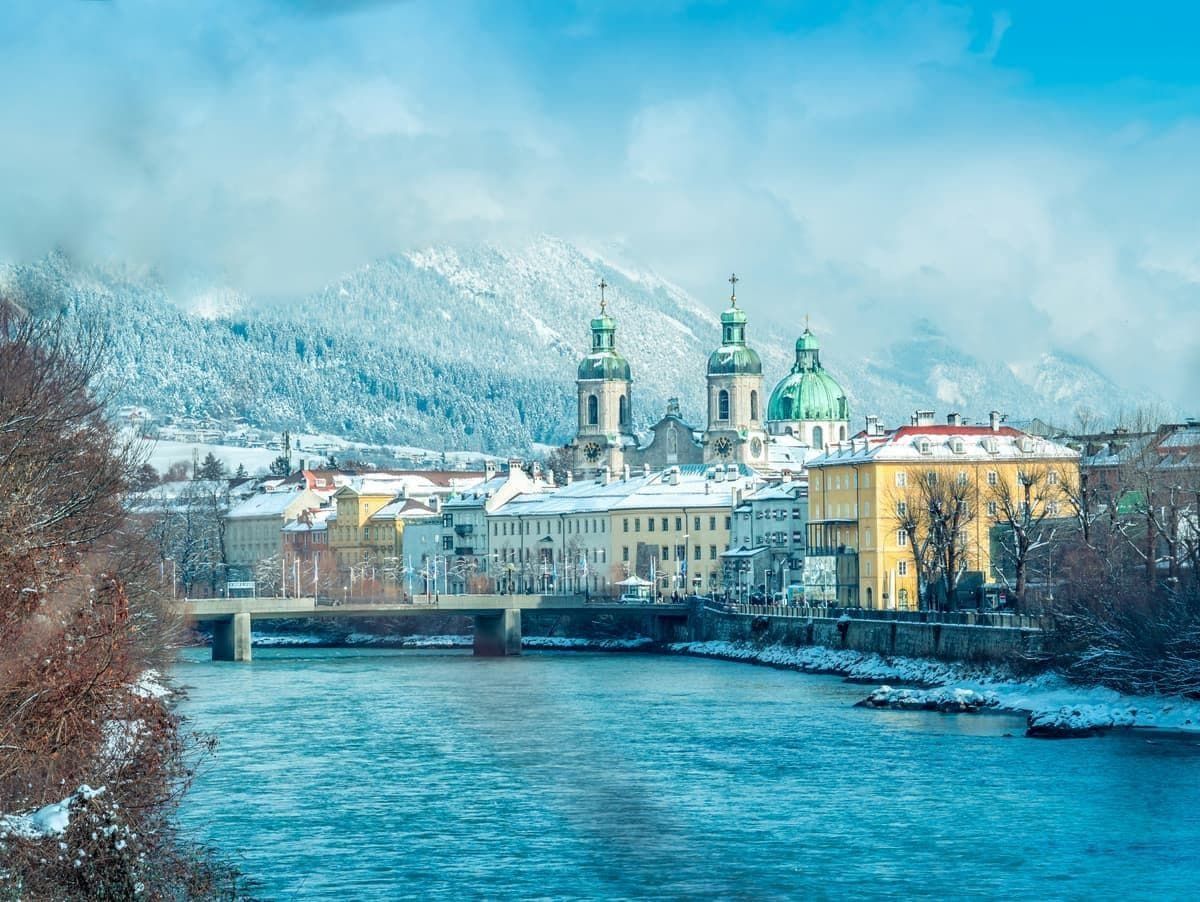
Located in the heart of the Alps, Innsbruck combines mountain scenery with urban life.
Visitors can explore a historic centre, ride cable cars directly into the mountains and enjoy outdoor activities almost year-round.
It is one of the best places in Europe for travellers who want both city comforts and easy access to nature.
Food & Drink
Austrian cuisine reflects the country’s imperial history and regional traditions.
One of the country’s most famous dishes is Wiener Schnitzel (breaded veal cutlet), a classic that originated in Vienna and remains a staple of Austrian dining.
For those with a sweet tooth, Sachertorte (chocolate cake) and Apfelstrudel (apple strudel) are among the country’s most beloved desserts, often enjoyed in one of Austria’s historic coffee houses.
Coffee culture is an essential part of Austrian life. In cities such as Vienna, cafes are not simply places to grab a drink but social institutions where people gather to read, work, meet friends or spend an afternoon watching the world go by.
Local Culture
Austria’s culture has been shaped by centuries of music, art, architecture and tradition.
The country is closely associated with composers such as Mozart, Beethoven and Strauss, and classical music remains an important part of Austrian identity.
Visitors will also encounter strong regional traditions, from Alpine festivals and Christmas markets to traditional clothing such as dirndls and lederhosen in some regions.
Despite its rich history, Austria feels modern, efficient and welcoming, creating a balance between tradition and contemporary life.
Quick Facts
| Detail | Austria |
|---|---|
| Capital | Vienna |
| Population | Approximately 9 million |
| Currency | Euro |
| Language | German |
| Time Zone | GMT+1 |
| Known For | Alps, classical music, imperial history and coffee culture |
| Airport | Vienna International Airport |
| Best Time to Visit | May-June, September-October, or December for Christmas markets |
| Visa | Austria is part of the Schengen Area |