Quick Facts
Armenia At A Glance
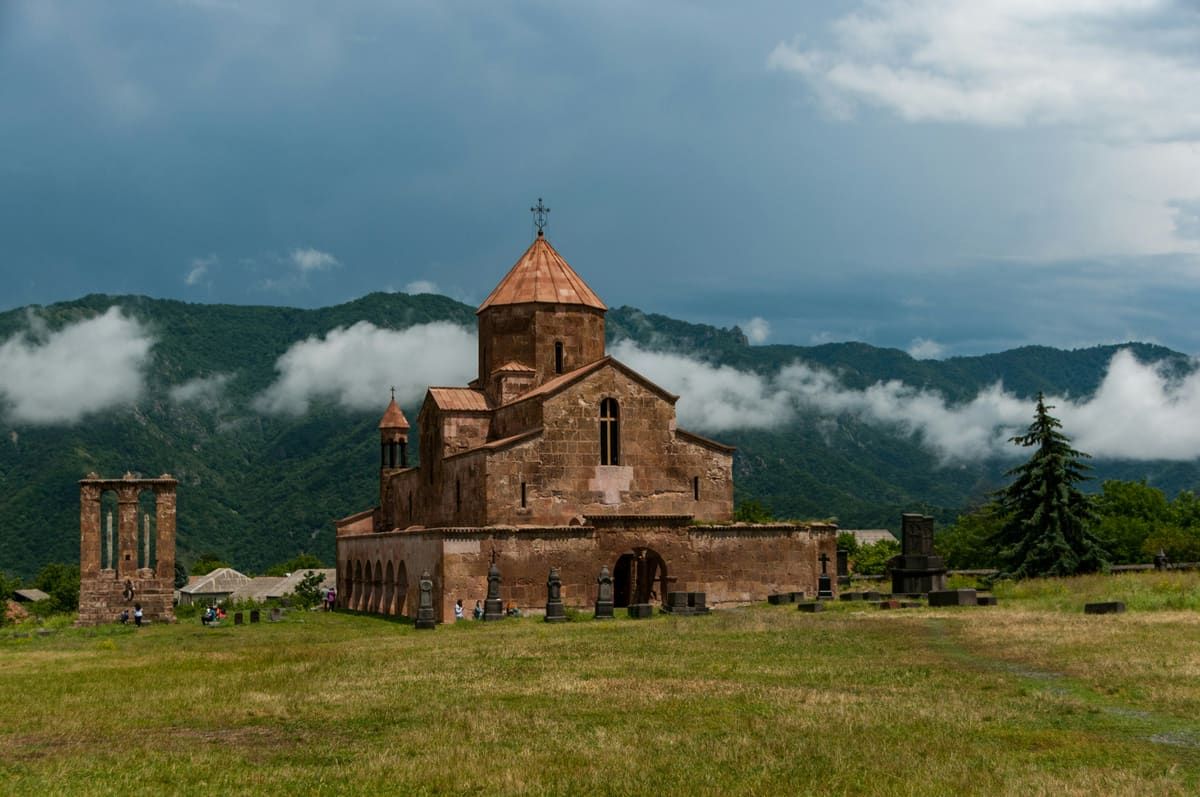
Ancient monasteries perched on cliffs, mountain roads winding through deep gorges, centuries-old traditions and one of the world’s oldest cultures. Armenia is a destination where history, faith and landscape come together in unforgettable ways.
Understanding Armenia
Situated in the South Caucasus between Europe and Asia, Armenia is one of the world’s oldest continuously inhabited countries.
It was the first nation to officially adopt Christianity as a state religion in AD 301, a legacy still visible today in the countless monasteries, churches and religious sites scattered across the country.
Yet Armenia is much more than its history.
Towering mountain ranges, volcanic landscapes, deep river valleys and traditional villages create a country that feels both rugged and beautiful. While many travellers visit for the famous monasteries, they often leave remembering the hospitality, food and strong sense of identity that defines modern Armenia.
Despite centuries of invasions, empires and political upheaval, Armenia has preserved a remarkably distinct culture and national character.
It is a destination that rewards curiosity and invites visitors to look beyond the obvious.
Is Armenia Safe?
Most visitors experience Armenia as a safe and welcoming destination. Popular tourist areas such as Yerevan, Lake Sevan, Dilijan, Garni and Geghard are visited without issue by thousands of travellers each year.
The main exception is the border region with Azerbaijan. Due to ongoing tensions and the risk of armed incidents between the two countries, visitors should check the latest official travel advice before planning trips close to the eastern border.
For the majority of tourist destinations, including the country’s most popular cultural, historical and natural attractions, travel is straightforward and generally considered safe.
Best Areas To Explore
Yerevan
Armenia’s capital is often called one of the world’s oldest continuously inhabited cities.
Built largely from pink volcanic stone, Yerevan combines grand Soviet-era avenues, lively cafe culture, modern restaurants and stunning views of Mount Ararat, Armenia’s most powerful national symbol.
The city comes alive in the evenings when locals gather in outdoor cafes, parks and public squares. Republic Square, the Cascade Complex and the Vernissage Market provide excellent introductions to Armenian culture and daily life.
Unlike many capitals, Yerevan feels approachable and easy to explore on foot.
Lake Sevan
Known as the “Jewel of Armenia,” Lake Sevan is one of the largest high-altitude freshwater lakes in the world.
Surrounded by mountains and crowned by the historic Sevanavank Monastery, the lake offers some of the country’s most beautiful scenery.
During summer, locals come here to swim, relax by the water and enjoy lakeside restaurants serving freshly caught fish.
Dilijan
Often referred to as the “Armenian Switzerland,” Dilijan is known for its forests, mountain scenery and peaceful atmosphere.
Traditional houses, hiking trails and nearby monasteries make it one of the country’s most relaxing destinations and a favourite escape from city life.
The surrounding landscapes feel completely different from the dry volcanic terrain found elsewhere in Armenia.
Tatev Region
Southern Armenia is home to some of the country’s most spectacular scenery.
The highlight is Tatev Monastery, dramatically positioned on the edge of a deep gorge. Reaching it often involves riding the Wings of Tatev, one of the longest reversible cable cars in the world.
The journey itself is almost as memorable as the monastery.
Garni & Geghard
These two sites provide one of the best introductions to Armenia’s history.
Garni Temple is the only surviving Greco-Roman temple in the Caucasus, while nearby Geghard Monastery is partially carved directly into the surrounding cliffs.
Together they showcase two very different chapters of Armenia’s past and are among the country’s most visited attractions.
Food & Drink
Armenian cuisine is deeply connected to family, hospitality and tradition.
Meals are often social occasions where several generations gather around the same table to share food, conversation and stories.
One of the country’s most important foods is lavash (traditional flatbread), recognised by UNESCO as part of Armenia’s cultural heritage. Freshly baked and often served straight from a clay oven, it accompanies almost every meal.
Another essential experience is khorovats (Armenian barbecue). Grilled over open flames and shared among family and friends, it is considered by many Armenians to be the country’s national dish.
Armenia also has one of the world’s oldest winemaking traditions. Archaeologists have discovered evidence of winemaking dating back thousands of years, and today visitors can enjoy everything from family-run wineries to modern wine bars serving local varieties rarely found outside the region.
Local Culture
Armenia’s culture is shaped by resilience, faith and a strong sense of identity.
Family remains central to daily life, and visitors often notice how warmly they are welcomed into restaurants, guesthouses and local communities.
Christianity continues to play an important role in Armenian life, influencing everything from architecture and traditions to national celebrations and cultural identity.
Music, dance, craftsmanship and storytelling remain deeply embedded in the culture, creating a country that feels both ancient and remarkably alive.
Perhaps more than anything else, Armenia leaves visitors with a sense of connection to its people and their history.
Quick Facts
| Detail | Armenia |
|---|---|
| Capital | Yerevan |
| Population | Approximately 3 million |
| Currency | Armenian Dram (AMD) |
| Language | Armenian |
| Time Zone | GMT+4 |
| Known For | Ancient monasteries, mountains, wine and history |
| Airport | Zvartnots International Airport |
| Best Time to Visit | May-June and September-October |
| Visa | Many nationalities can enter visa-free or obtain an e-visa |