Quick Facts
Bosnia and Herzegovina At A Glance
Ottoman bazaars, mountain villages, turquoise rivers and a fascinating blend of cultures. Bosnia and Herzegovina offers some of Europe’s most rewarding travel experiences while remaining one of the continent’s most underrated destinations.
Understanding Bosnia and Herzegovina
Located in the heart of the Balkans, Bosnia and Herzegovina is a country shaped by centuries of cultural exchange.
Ottoman, Austro-Hungarian, Slavic and Mediterranean influences have all left their mark, creating a destination unlike anywhere else in Europe.
One of the country’s most striking features is the way different cultures and religions coexist. Mosques, churches and synagogues can often be found within walking distance of one another, reflecting a complex and fascinating history.
Today, visitors discover a country of dramatic mountain landscapes, historic towns, emerald rivers and warm hospitality.
Best Areas To Explore
Sarajevo
Bosnia and Herzegovina’s capital is one of Europe’s most fascinating cities.
Often called the place where East meets West, Sarajevo combines Ottoman bazaars, Austro-Hungarian architecture, modern cafes and significant historical landmarks.
Despite its turbulent past, Sarajevo feels vibrant, welcoming and full of life.
Mostar
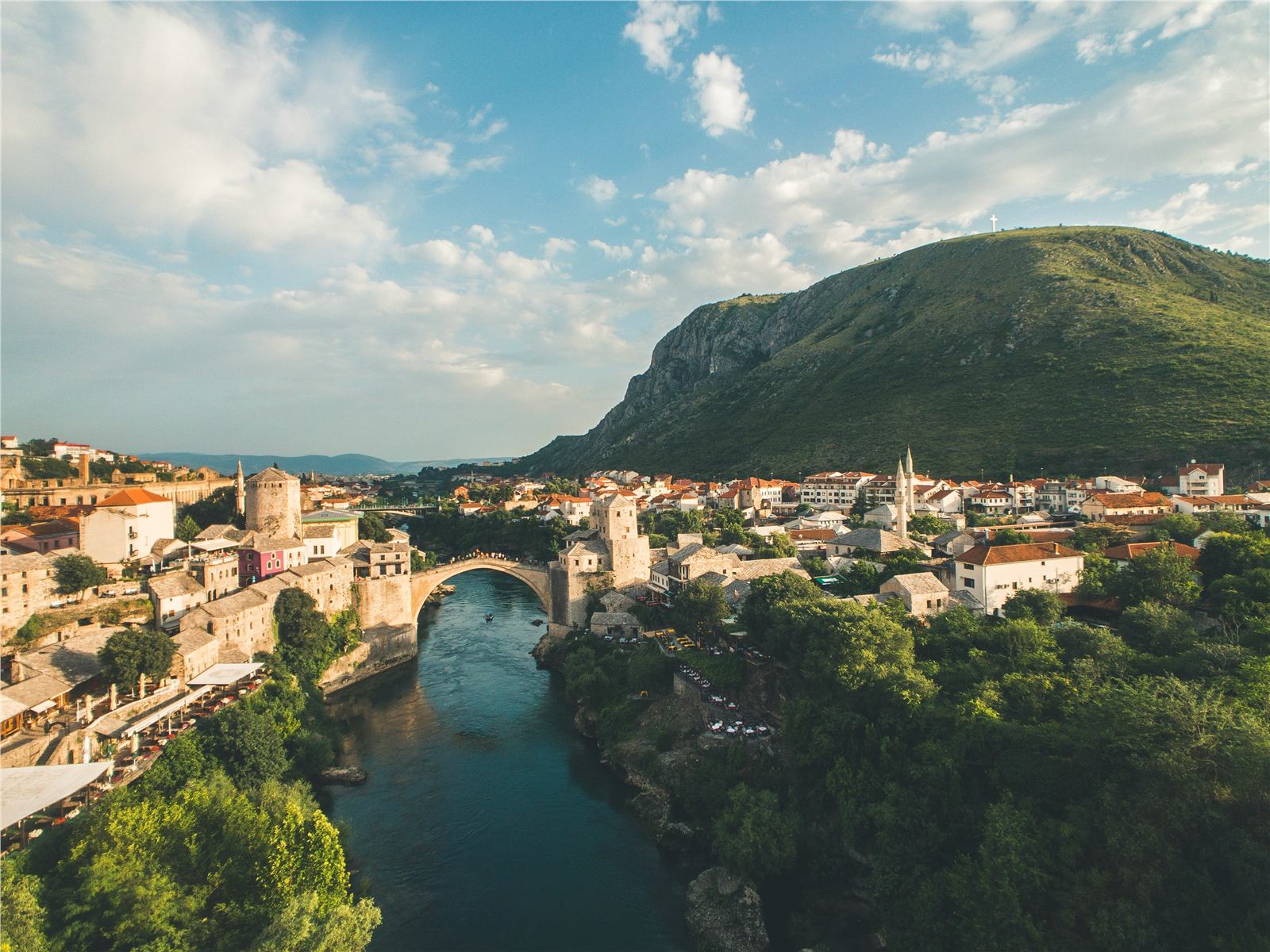
Mostar is one of the most recognisable destinations in the Balkans.
Its famous Stari Most (Old Bridge), rebuilt after being destroyed during the Bosnian War, stretches gracefully across the turquoise Neretva River and has become a symbol of reconciliation and resilience.
Blagaj
Just outside Mostar lies one of the country’s most beautiful settings.
The small village of Blagaj is famous for Blagaj Tekke (historic monastery), dramatically positioned beside the source of the Buna River.
Jajce
Jajce is unique in Europe for having a waterfall located in the centre of the town.
Beyond the waterfall, visitors will find medieval fortifications, historic churches, traditional houses and beautiful natural scenery.
The Dinaric Alps
Much of Bosnia and Herzegovina is covered by mountains.
The Dinaric Alps offer hiking, rafting, skiing and spectacular landscapes throughout the year.
Food & Drink
Bosnian cuisine reflects centuries of cultural influences from the Ottoman Empire, Central Europe and the Balkans.
One of the country’s most famous dishes is cevapi (small grilled minced meat sausages), traditionally served inside freshly baked flatbread with chopped onions.
Another classic is burek (filled flaky pastry), typically filled with meat, cheese or spinach.
Coffee also plays an important role in daily life. Traditional Bosnian coffee is served slowly and enjoyed even more slowly, often accompanied by conversation.
Local Culture
Bosnia and Herzegovina’s culture is shaped by diversity.
Centuries of interaction between different ethnic, religious and cultural groups have created traditions that blend influences from East and West.
Hospitality is deeply valued, and visitors frequently remark on the warmth and generosity of local people.
Perhaps more than anything else, Bosnia and Herzegovina leaves visitors with a deeper appreciation for the resilience of its people and the richness of its cultural heritage.
Quick Facts
| Detail | Bosnia and Herzegovina |
|---|---|
| Capital | Sarajevo |
| Population | Approximately 3.2 million |
| Currency | Convertible Mark (BAM) |
| Languages | Bosnian, Croatian and Serbian |
| Time Zone | GMT+1 |
| Known For | Mostar, Sarajevo, Ottoman heritage, mountains and rivers |
| Airport | Sarajevo International Airport |
| Best Time to Visit | May-June and September-October |
| Visa | Many nationalities can enter visa-free for short stays |