Once a settlement beyond the boundaries of Ancient Rome, Trastevere developed its own identity across centuries of history.
From medieval houses and hidden churches to bustling piazzas, local traditions and lively evening streets, it remains one of the best places to experience both the past and present of Rome.
Before becoming one of Rome’s most popular neighbourhoods, Trastevere was quite literally a world apart.
What Trastevere Is
Its name comes from the Latin Trans Tiberim (across the Tiber). While Ancient Rome developed primarily on the eastern bank of the river, the settlement on the opposite side grew separately.
In the earliest days of Rome, this area belonged to the Etruscans before being conquered by the Romans and connected to the city by the Pons Sublicius, an ancient wooden bridge that once crossed the Tiber.
How It Began
The first residents of Trastevere were very different from those living in the heart of Ancient Rome.
Sailors, fishermen, traders and immigrants from across the Mediterranean settled here, particularly communities from the eastern provinces of the Roman Empire, including Syrians and Jews.
This mixture of cultures helped create the distinct identity that still defines the neighbourhood today.
How To Arrive
One of the best ways to understand Trastevere is to arrive on foot.
Crossing either Ponte Sisto or Ponte Garibaldi feels like passing from one side of Rome into another. Along the way you’ll enjoy views of the dome of St. Peter’s Basilica, the historic Jewish Ghetto and Tiber Island, the only island in the River Tiber and one of Rome’s most distinctive landmarks.
Once you enter Trastevere, the atmosphere changes immediately.
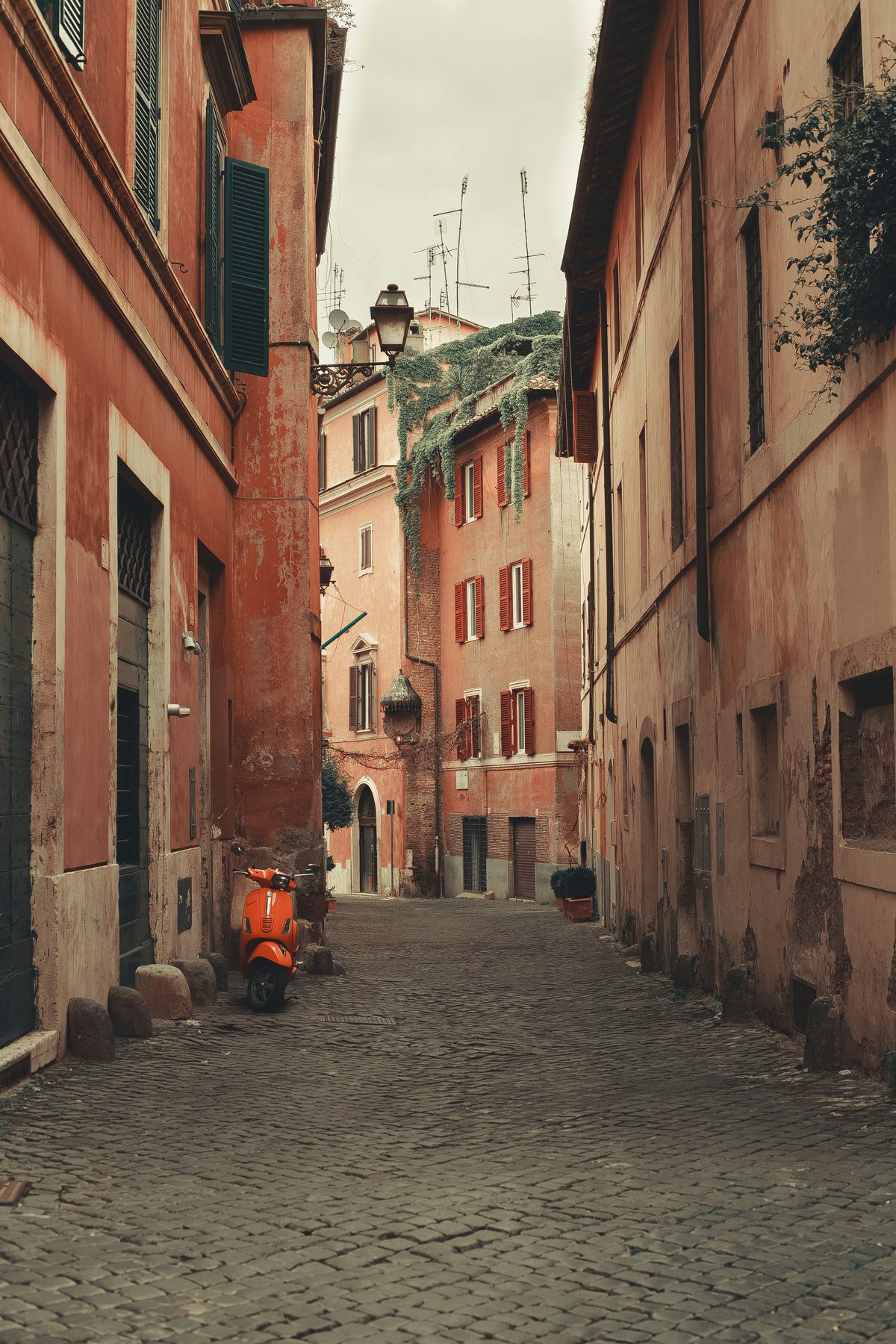
Narrow cobbled streets replace grand avenues. Ivy spills from balconies. Laundry hangs between buildings. Although much of the neighbourhood is now pedestrianised, some streets are still shared with cars, often without pavements, creating a reminder that these lanes were designed centuries before modern traffic existed.
What Makes It Look Unique
Most of the buildings you see today date from the eighteenth and nineteenth centuries, but traces of medieval Rome still survive for those willing to look closely.
One of the best examples can be found at the corner of Vicolo della Luce and Via della Lungaretta, where a rare medieval house still stands.
Another survives in Vicolo dell’Atleta, built on the site where Rome’s first synagogue once stood.
Beautiful medieval buildings can also be found around Piazza Santa Cecilia and Piazza dei Mercanti, areas that many visitors never discover.
Hidden Historical Details
The streets beneath your feet tell a story too.
During the Middle Ages, Trastevere’s roads were little more than dirt pathways. In the late fifteenth century, Pope Sixtus IV ordered them to be paved with the famous Roman cobblestones known as sanpietrini, many of which remain in place today.
As you wander, take a moment to look down.
In Vicolo del Buco, you’ll find several Stolpersteine (stumbling stones). These small brass plaques commemorate Jewish residents who were deported during the Holocaust. Each stone records a name, date of birth and fate, quietly preserving the memory of people who once called these streets home.
Similar memorials can now be found throughout Europe.
The Quieter Side Of Trastevere
Yet some of Trastevere’s most rewarding corners are also its quietest.
Many visitors experience only the lively side of the neighbourhood, filled with restaurants, bars and evening crowds. For a very different atmosphere, explore the area around Piazza in Piscinula, Piazza Santa Cecilia and Piazza San Francesco d’Assisi.
This is the Trastevere many Romans love most: peaceful, atmospheric, and surprisingly untouched by nightlife.
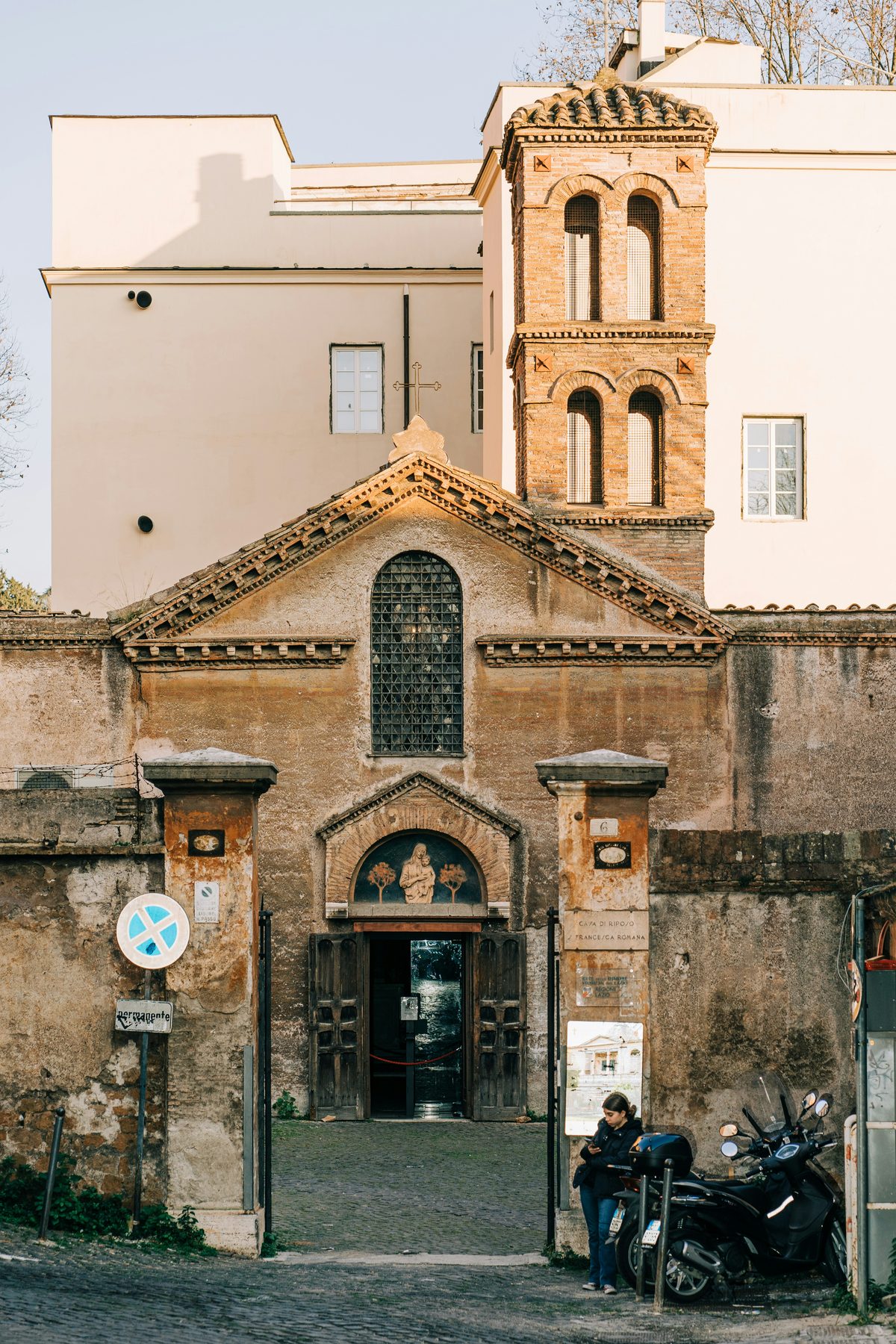
One hidden gem here is San Benedetto in Piscinula. According to tradition, Saint Benedict of Nursia stayed here while studying in Rome during the fifth century. From the outside it appears modest, but stepping inside reveals one of the neighbourhood’s most fascinating and overlooked churches.
Piazza Santa Maria In Trastevere
Eventually, almost every walk through Trastevere leads to Piazza Santa Maria in Trastevere, the neighbourhood’s heart.
Dominated by the magnificent Basilica di Santa Maria in Trastevere, this square has been a gathering place for centuries.
The basilica is believed to be one of the oldest places of Christian worship in Rome and is often considered the first church dedicated to the Virgin Mary.
At the centre of the piazza stands a fountain which, according to tradition, is the oldest fountain in Rome.
Trastevere Today
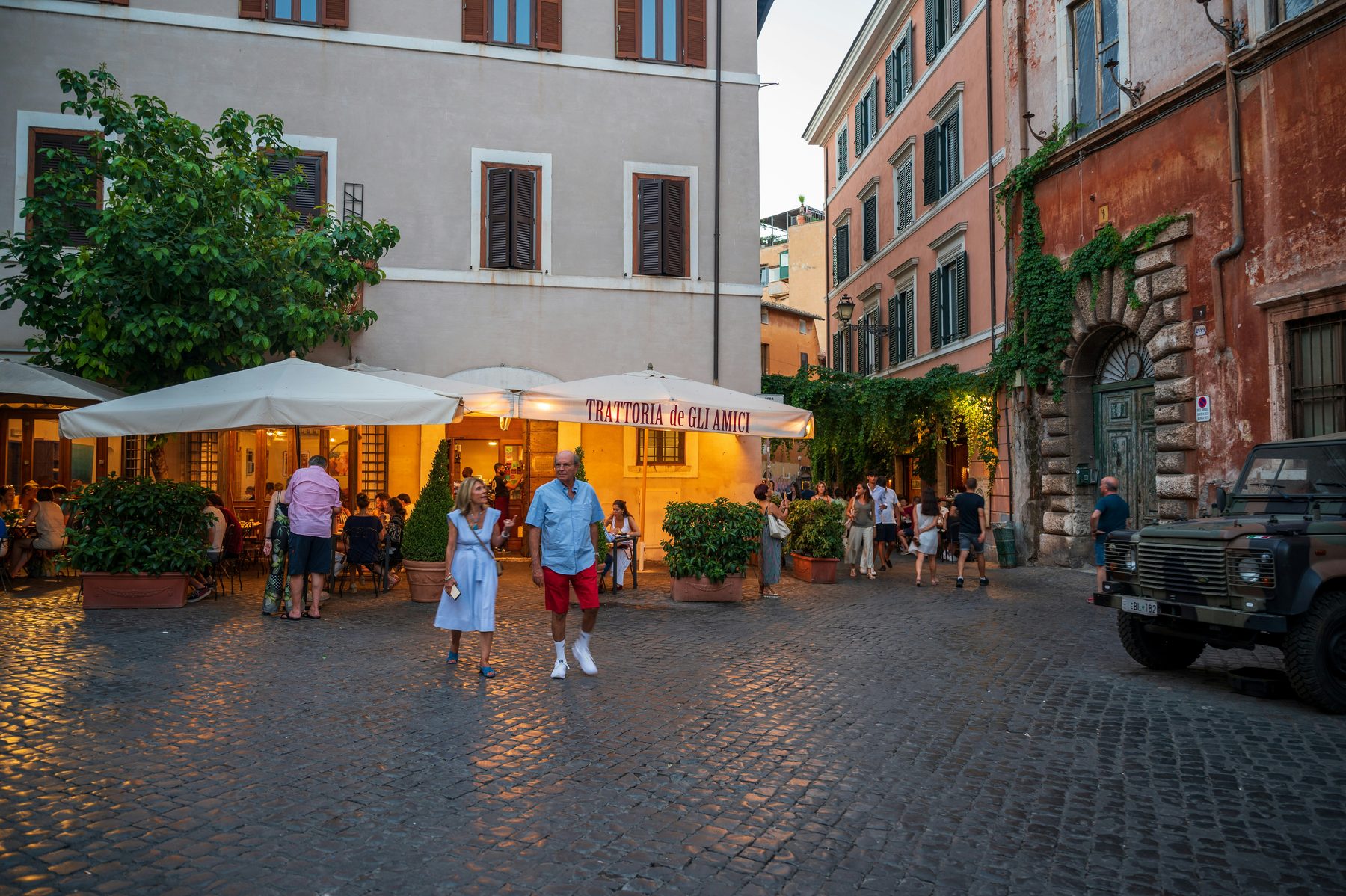
Today, Trastevere is one of the city’s most visited neighbourhoods. Its restaurants, wine bars, and nightlife attract visitors from around the world every evening.
Much of the nightlife is concentrated around Piazza Trilussa, Via della Scala, Vicolo del Cinque, Via della Lungaretta and the streets surrounding Piazza Santa Maria in Trastevere.
Here you’ll find everything from traditional trattorias and neighbourhood wine bars to cocktail bars and late-night gathering spots.
Yet beneath the crowds remains the neighbourhood’s original character: a place shaped by fishermen, immigrants, medieval streets, hidden courtyards and centuries of everyday Roman life.