Home/Cities/Bologna

The Ultimate Guide to Bologna

A warm, portico-lined university city in Emilia-Romagna, Bologna is known for medieval towers, one of Europe's oldest universities, outstanding food, red rooftops, markets, and an authentic local atmosphere.

Understanding Bologna

Image placeholder
Image placeholder

Bologna developed at the heart of northern Italy, positioned between some of the peninsula's most important trade routes. For centuries, merchants, scholars, travellers, and political leaders passed through the city, helping it become one of Italy's most prosperous and influential urban centres.

The city is perhaps best known for three things: its university, its food, and its distinctive architecture. Founded in 1088, the University of Bologna is widely considered the oldest university in the Western world and continues to shape the city's identity today. Students have filled Bologna's streets, cafes, libraries, and squares for more than nine centuries, giving the city an energy that remains visible everywhere.

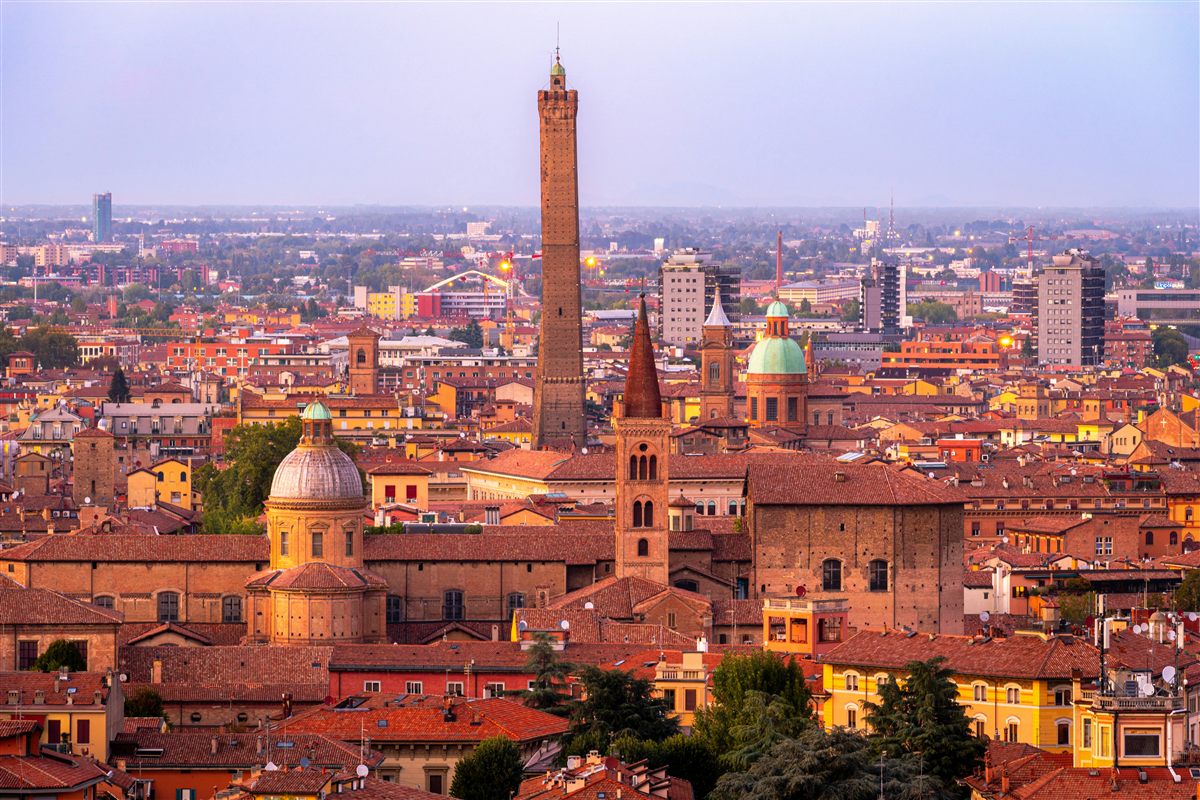
Bologna is often described through three historic nicknames: La Dotta, La Grassa e La RossaThe Learned, The Fat, and The Red. The names reflect the city's identity as home to the world's oldest university, one of Italy's most celebrated food cultures, and the distinctive red rooftops and terracotta buildings that dominate its skyline.

During the Middle Ages, Bologna became one of Europe's wealthiest cities. Powerful families built towers throughout the city as symbols of prestige and influence. Historians estimate that medieval Bologna may once have had close to one hundred towers, creating a skyline unlike anywhere else in Italy. Today, the famous Two Towers remain the city's most recognisable reminder of this period.

Equally distinctive are Bologna's famous porticoes. Stretching for almost forty kilometres throughout the city, these covered walkways shelter streets, squares, shops, cafes, and homes, creating an urban landscape found nowhere else in the world. They are so important to Bologna's identity that they have been recognised as a UNESCO World Heritage Site.

Walking through Bologna often feels different from visiting many Italian cities. The historic centre is large yet highly walkable, filled with arcaded streets, lively squares, markets, independent shops, churches, bookstores, and cafes. Rather than revolving around a handful of famous landmarks, much of Bologna's appeal comes from its atmosphere and everyday life.

The city is also deeply associated with food. Markets, delicatessens, traditional restaurants, fresh pasta shops, and family-run businesses remain central to daily life. Many dishes commonly described abroad as "Italian" actually originated in Bologna or the surrounding Emilia-Romagna region.

Bologna is also a city of stories, legends, and remarkable historical figures. Scholars such as Nicolaus Copernicus studied here, inventor Guglielmo Marconi was born nearby, and generations of writers, artists, philosophers, and scientists passed through its university. Visitors will also encounter local legends, from the hidden arrows of Corte Isolani to the city's famous Seven Secrets, small mysteries and curiosities hidden throughout the historic centre that continue to fascinate residents and travellers alike.

What makes Bologna distinctive today is the combination of history, academic life, food culture, and local identity. It feels less focused on tourism than many of Italy's most famous destinations, allowing visitors to experience a city that remains deeply connected to its traditions while continuing to function as a vibrant cultural and university centre.

Best Areas To Experience Bologna Properly

Image placeholder
Image placeholder

Centro Storico — Best for First-Time Visitors

If it is your first visit to Bologna, the historic centre is usually the best place to stay. The city's main attractions, markets, restaurants, churches, and squares are all within walking distance, making it easy to explore on foot.

  • Piazza Maggiore
  • Basilica di San Petronio
  • Two Towers

Quadrilatero — Best for Food Lovers

One of Bologna's oldest districts, Quadrilatero is famous for food shops, markets, delicatessens, wine bars, and traditional restaurants. The narrow streets are packed with local specialities and offer one of the best introductions to Bologna's culinary culture.

  • Historic food market
  • Traditional delicatessens
  • Wine bars

University District — Best for Atmosphere & Nightlife

The university has shaped Bologna for centuries, and this area remains one of the city's liveliest neighbourhoods. Students fill the streets, cafes, bars, bookshops, and public spaces throughout the year.

  • University buildings
  • Student cafes
  • Evening atmosphere

Santo Stefano — Best for Quiet Historic Charm

Located slightly away from the busiest streets, Santo Stefano offers beautiful architecture, elegant squares, and a more relaxed atmosphere while remaining close to the city centre.

  • Santo Stefano complex
  • Historic streets
  • Local cafes

Food In Bologna

Image placeholder
Image placeholder

Bologna is often considered one of Italy's great food capitals. The cuisine of Emilia-Romagna is famous throughout the country for its fresh pasta, cured meats, cheeses, and traditional recipes that have been passed down through generations.

For a first visit, look out for:

  • Tagliatelle al Ragu
  • Tortellini
  • Tortelloni
  • Lasagne Verdi
  • Mortadella
  • Crescentine
  • Cotoletta alla Bolognese
  • Parmigiano Reggiano
  • Aceto Balsamico Tradizionale

Visitors will quickly notice that many dishes commonly associated with Italian cuisine around the world have roots in Bologna and the surrounding region.

Read more: What To Eat In Bologna

Local Culture, Habits & Traditions In Bologna

Image placeholder
Image placeholder

Bologna's identity is closely tied to food, learning, and community. Many traditional pasta recipes are still prepared by hand, and visitors may occasionally spot local women rolling fresh pasta in shop windows or family-run workshops, continuing a craft passed down through generations.

The city is also known for its strong market culture. Historic food streets around the Quadrilatero remain busy with delicatessens, cheese shops, bakeries, butchers, and fresh pasta makers, preserving traditions that have shaped daily life for centuries.

One of Bologna's most important annual celebrations is the Feast of San Petronio on 4 October, dedicated to the city's patron saint. Religious ceremonies, concerts, and community events take place across the historic centre.

Throughout the year, the city also hosts internationally recognised events such as the Bologna Children's Book Fair, considered the world's leading event for children's publishing and illustration, the Bologna Jazz Festival, and Cioccoshow, a popular celebration of chocolate and artisanal sweets. During December, Christmas markets and festive decorations bring extra atmosphere to the historic centre.

Bologna is also famous for its hidden curiosities. Locals often challenge visitors to discover the city's Seven Secrets, a collection of legends, optical illusions, hidden details, and small mysteries scattered throughout the historic centre.

Visitors may also discover traces of Bologna's hidden canals, learn about its past as one of Europe's most important silk-producing centres, or visit the historic Archiginnasio, home to one of the world's oldest anatomy theatres. These lesser-known details reveal a fascinating side of Bologna that many travellers overlook.

Getting Around Bologna

Image placeholder
Image placeholder

Useful Apps & Tickets

  • Google Maps - Best for walking directions, attractions, restaurants, and transport routes.
  • Moovit - Live public transport information and journey planning.
  • Trenitalia - Useful for regional and high-speed train travel throughout Italy.
  • TPER - Official local public transport information and tickets.
  • Free Now - Taxi booking app.

Good To Know

  • Bologna is highly walkable.
  • Most attractions are located within the historic centre.
  • Local buses connect outer districts and nearby areas.
  • Bologna Centrale is one of Italy's most important railway stations.
  • High-speed trains connect Bologna with Florence, Milan, Venice, Rome, and Naples.
  • Tickets can be purchased through apps, ticket machines, tobacco shops (tabacchi), and stations.

Best Time To Visit Bologna

Image placeholder
Image placeholder

Spring (April-June) and autumn (September-October) are generally the best times to visit Bologna. Temperatures are comfortable for exploring the city on foot, enjoying outdoor dining, and discovering its markets and historic streets.

Summer (July-August) brings warm weather, outdoor events, festivals, and lively evenings, although temperatures can become very hot during peak summer.

Winter (November-March) is quieter and often offers lower accommodation prices. Christmas lights, seasonal markets, and cultural events add extra atmosphere to the city during December.

The best time to visit depends largely on your interests. Food lovers often enjoy autumn for seasonal produce and local specialities, while many visitors prefer spring for pleasant weather and outdoor sightseeing.

Quick Facts About Bologna

CountryItaly
RegionEmilia-Romagna
PopulationAbout 390,000 people
LanguageItalian
CurrencyEuro (EUR)
Time ZoneCET (UTC+1), CEST (UTC+2) in summer
Best Time To VisitApril to June, September to October
Main AirportBologna Guglielmo Marconi Airport (BLQ)
Typical Stay2-3 days
Important To KnowBologna is one of Italy's best food destinations, highly walkable, and an excellent base for exploring Emilia-Romagna. Many visitors come for the cuisine but end up falling in love with the city's porticoes, historic atmosphere, and authentic local character.
Latest guides & stories

Related articles